For two years now, researching a novel that I am working on, I have been grappling with the definition of witch. A great starting point is the University of Edinburgh site, The Survey of Scottish Witchcraft. Witches of Scotland seeks a pardon and apology for those accused under the Witchcraft Act of 1563-1736.
The numbers vary on how many witches were tried, or executed, even in Scotland. One source offers: 2,148 women and 410 men were executed for witchcraft, by strangulation and burning. According to the Survey, over 3,000 were accused, but of those, there is a record of the sentence from a trial for only 305: “205 of these were to be executed, 52 were acquitted, 27 were banished, 11 were declared fugitive, 6 were excommunicated, 2 were put to the horn (outlawed), 1 person was to be kept in prison and 1 person was to be publicly humiliated. In addition, a further 98 were recorded as having fled from prosecution. This seems to suggest that 67%, two-thirds, were executed.” They point out there could well have been more. Contrary to contemporary beliefs, only nine of those listed their occupation as midwives, and 141 were accused of folk healing.
At the University of Oxford site, “Alewives in Oxford“, you can see a parallel between images of witches and women brewers (a broomstick over the door to indicate that good beer could be had therein, the brewing cauldrons, and a pointed hat to make alewives identifiable at market), but that doesn’t mean alewives were witches. The site mainly discusses how women were driven out of the brewing profession.
Historic UK gives examples of how women were tortured to make them confess to witchcraft.
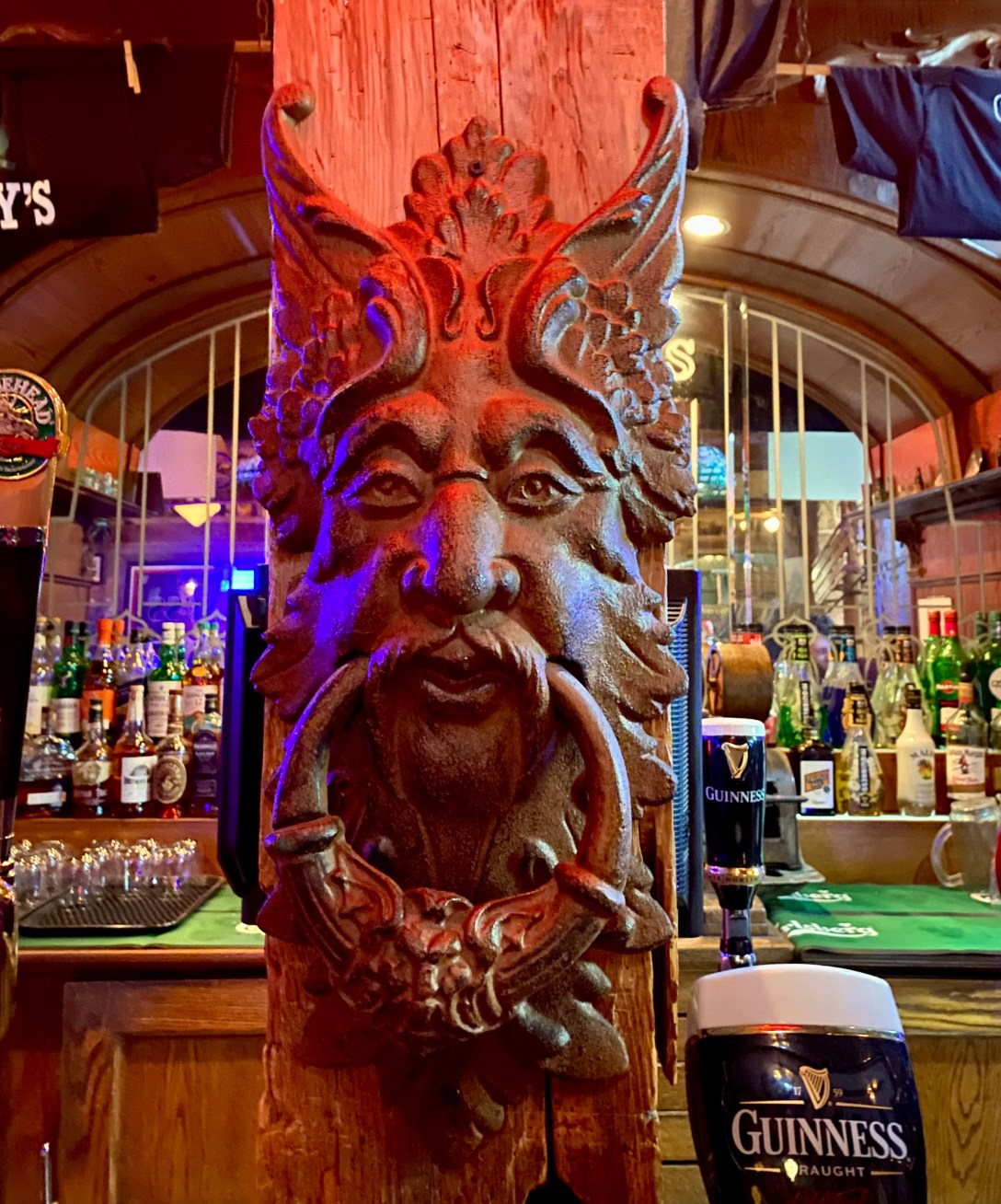
I took the above photo of the Green Man at our local pub. More on the Green Man another time.

 DEBRA MARTENS