

Having decided a slice of pizza would be perfect for a quick lunch before exploring Belleville, we went into a place called La Favorita Trattoria on Front Street. Although the front steam table was empty, there were lots of people at the back. Thus we found ourselves in a bar that served only beer, with the regular daytime drinkers. Maybe it was the pint of Guinness that made me delighted with this slip into an alternate reality, or maybe it was just enthusiasm for my Belleville project. (No pizza was available.)
This discombobulation is to be expected when one walks modern sidewalks looking for a city that existed over 150 years ago. I was in Belleville to look at a house that I have identified as an early home of spiritualism in Ontario. As in: seances.
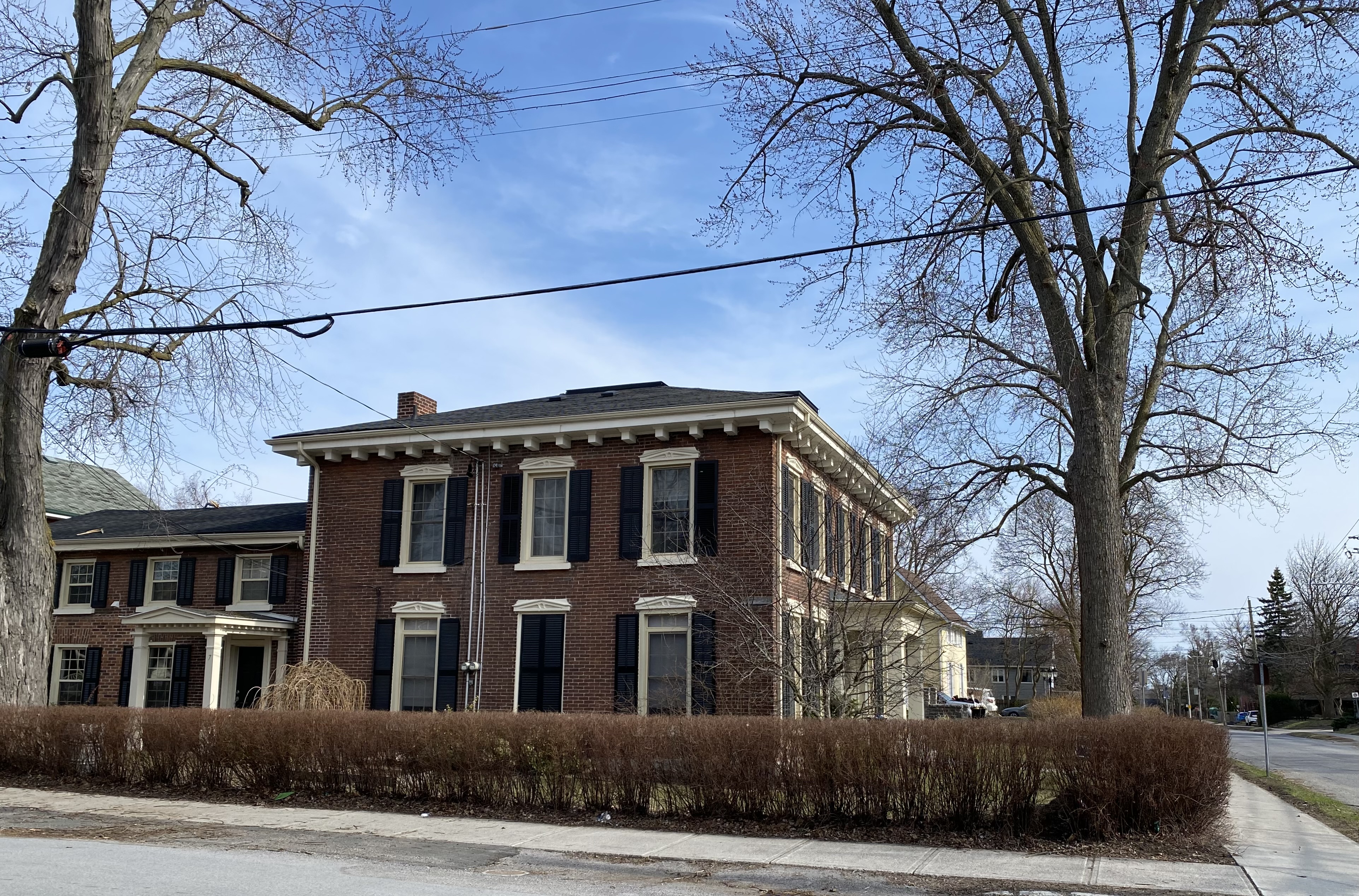
Delia O’Hare, who lived at 231 John Street, hosted seances in the 1850s and 1860s. Delia O’Hare was the daughter of Andrew Buell, who in 1855 bought the house for her and her husband, who was the Clerk of the Peace and County Attorney, with an office on nearby Front Street. Andrew Buell enjoyed attending seances, which you can read about in his correspondence in the Ontario Archives.
Nor was he the only one. According to the Belleville library website, Susanna Moodie (yes, she of Roughing It In The Bush) may have attended seances at O’Hare’s house in the later 1850s. Moodie’s husband, J.W. Dunbar Moodie, was a Sheriff at the Court House (County officer), and may have been acquainted with fellow functionary O’Hare. At this time, the Moodies lived in a cottage on Bridge Street.

Our landlady directed us to the cottage, informing us at the same time that Moodie’s boy drowned at the age of five or six. An archivist further details this fact in QNet news: in 1844, John Moodie drowned in the Moira River at the age of six. A child’s death may go some way to explain why this literary lady of letters became, for a number of years, an avid participant in seances. Moodie was first introduced to them by the Fox sisters, two Americans whose older sister was in charge of their psychic sessions; they had a relative living in or near Belleville whom they were visiting. They communicated with spirits through knocking or rapping out letters of the alphabet. According to Ballstadt etc., (“A Glorious Madness”) Moodie and her husband also attended seance evenings at the home of Mr. J.W. Tate, with Mary Williamson, as well as hosting seances at their cottage, using a Spiritoscope that Dunbar made.

Writing about spiritualism, Moodie made several references to witches. In May 1858, she writes to her publisher, Richard Bentley, of a volume she is working on: “its incidents are founded upon magic and witchcraft.” She goes on to write of spiritualism as a mystery, “strange, solemn and beautiful, and which I now believe contains nothing more nor less than a new revelation from God to man.” Of the visits of K. Fox, she says “She is certainly a witch,” and goes on to describe a rapping session where she receives answers that only she can know, which she dismisses as “she may be clairvoyant and able to read unwritten thoughts…” And she concludes this missive with “Can such a thing as witchcraft really exist? Or possession by evil spirits? I am bewildered…” (Autumn 1855)
One of Moodie’s Suffolk sketches is called “The Witch of the East Cliff,” La Belle Assemblee, NS 6 (July 1827), pp. 15-19. Also, her Literary Garland novels include Midlred Rosier: A Tale of the Ruined City, 1844, and Monica, or, Witchcraft, 1846.


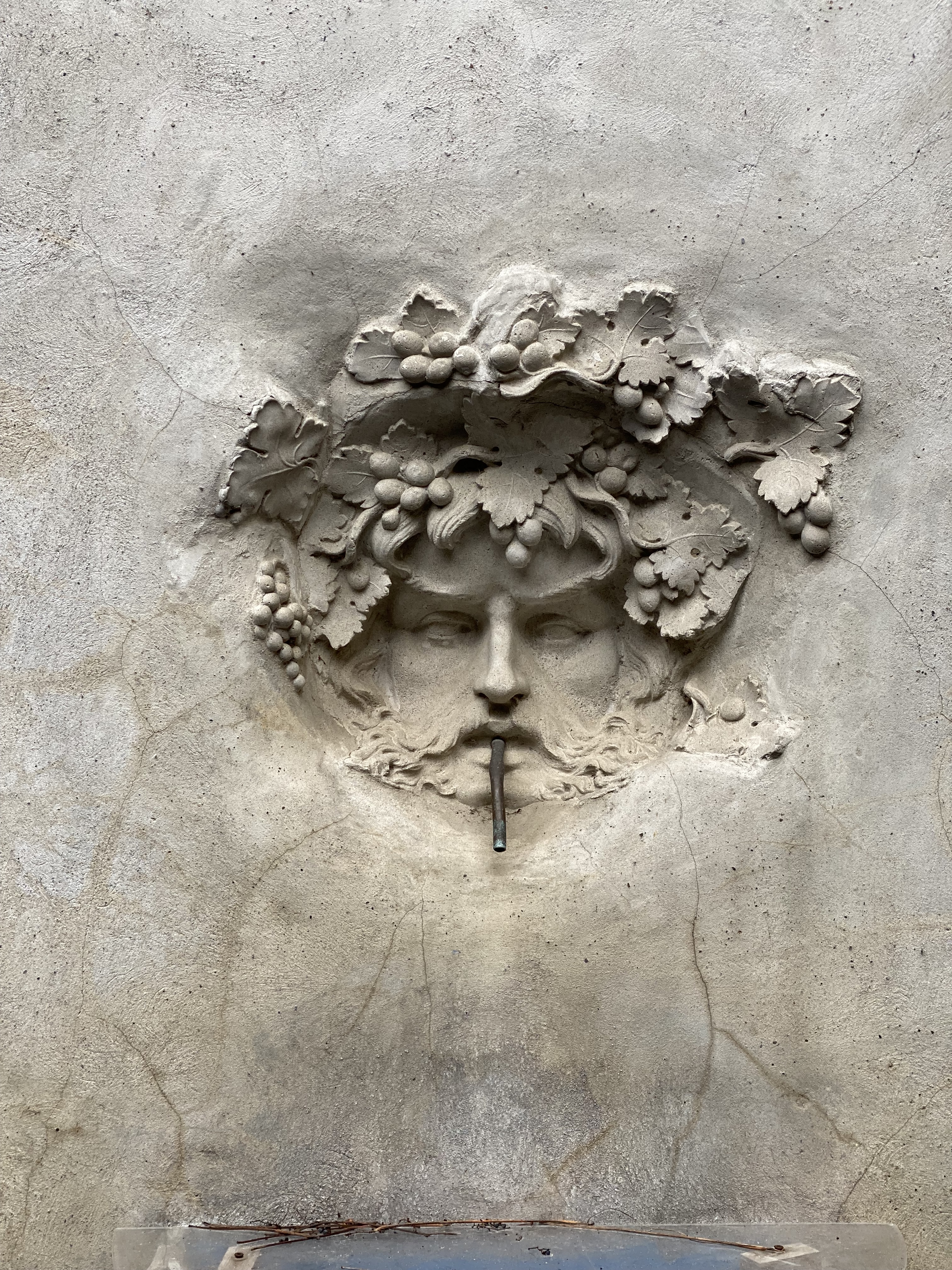
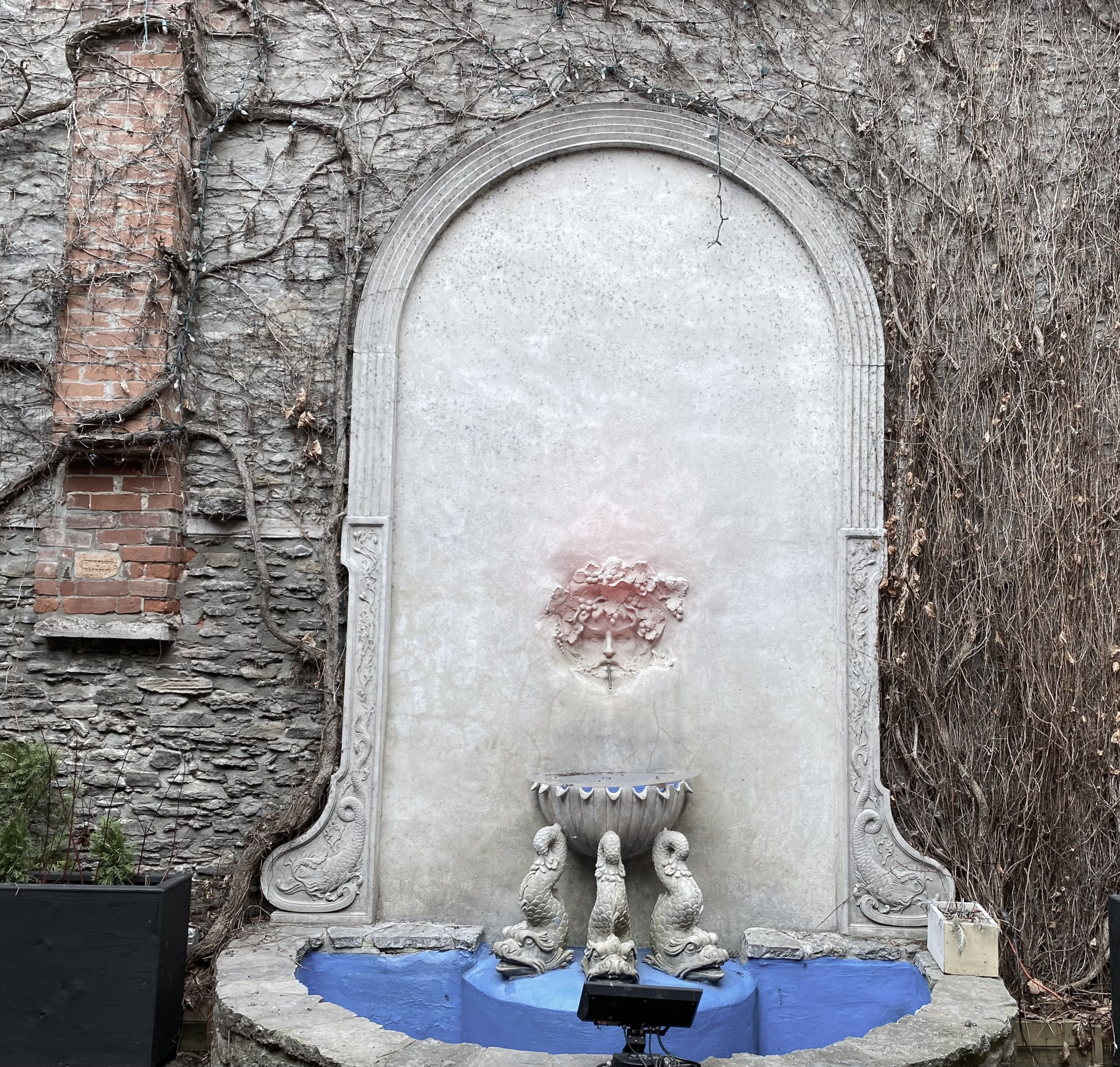
Rounding off the overlay of worlds was the Green Man, who presented himself at dinner at Dinkel’s and Paulo’s. Some argue that the Green Man arrived in the UK with the Romans. The Mediterranean Green Man differs in his greenery from the church fellow: he sports either aquatic plants, or vines and grapes. This one is from Italy, imported by a restaurant owner some forty years ago. As you can see, he wears vines and grapes, and is part of a fountain in a courtyard that seems as if it might have been part of a stable or carriage house.
Further
Carl Ballstadt, Michael Peterman, and Elizabeth Hopkins, “‘A Glorious Madness’: Susanna Moodie and the Spiritualist Movement, Journal of Canadian Studies Vol 17, No. 4 (Winter 1982-83), pages 88-100.
Belleville Community Archives page on Susanna Moodie, and Belleville History Alive.
Books that Moodie mentions: The Healing of Nations by Charles Linton, edited by Gov. Tallmadge; E.W. Capron Modern Spiritualism: Its Facts and Fanaticisms, Its Consistencies and Contradictions; articles in the Albion; Dexter and Edmonds on Spiritualism.
Books that Buell mentions: Spirit Manifestations: Examined and Explained by John Bovee Dodds, De Witt and Davenport, Nos 160+162 NY; The Night-side of Nature, 1848, by Catharine Crowe; Charles Beecher’s Report on the Spiritual Manifestations; and the Biography of Mrs Semantha Mettler, the Clairvoyant by Frances Harriet Green. Also the Spiritual Telegraph.
Here is the house that I expected a house of seances to look like:

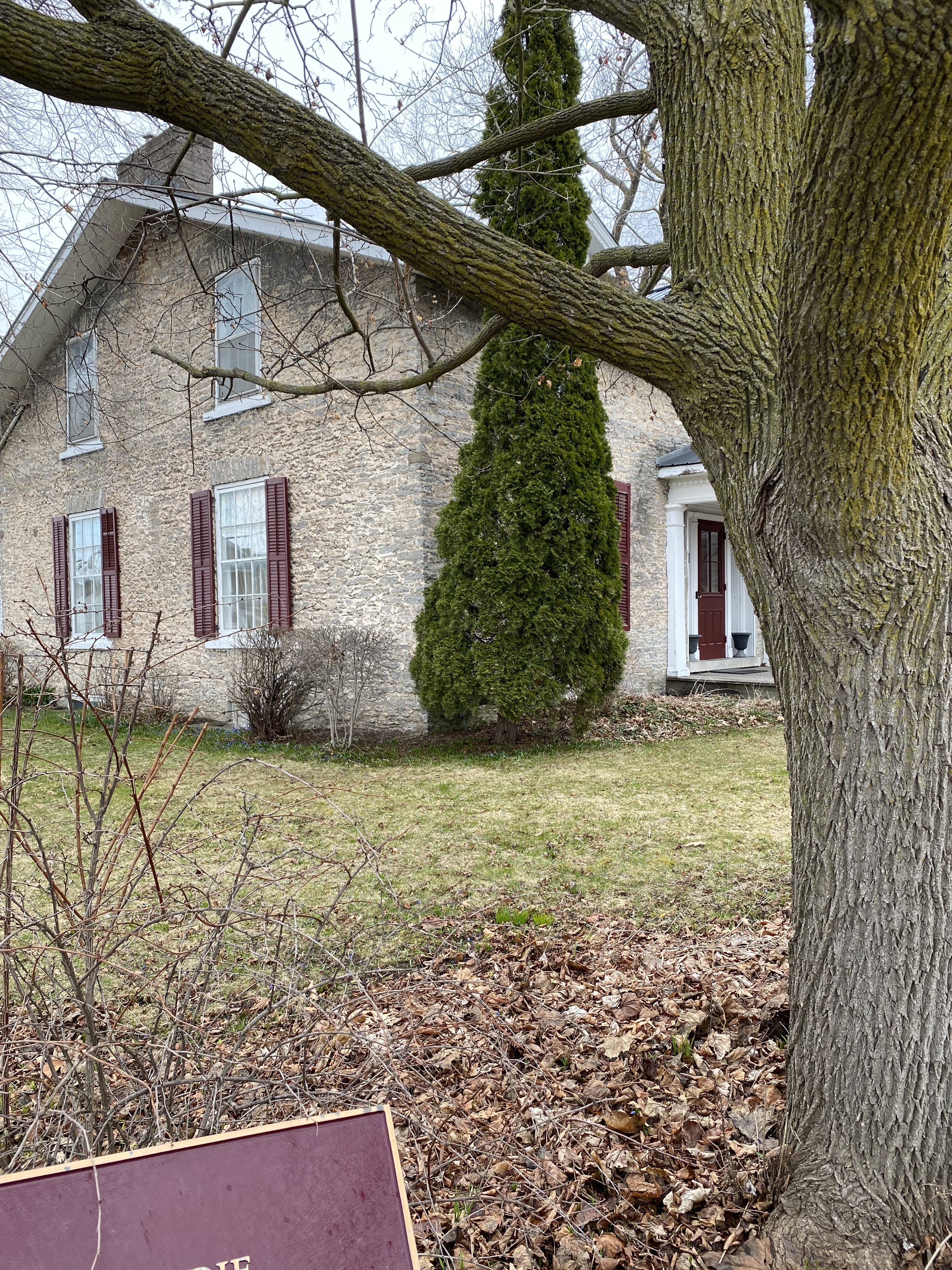
And here is the house that Delia O’Hare moved to in 1868, after her husband died:

All photos by D. Martens. Header photo is of Belleville City Hall, built in 1872.

 DEBRA MARTENS