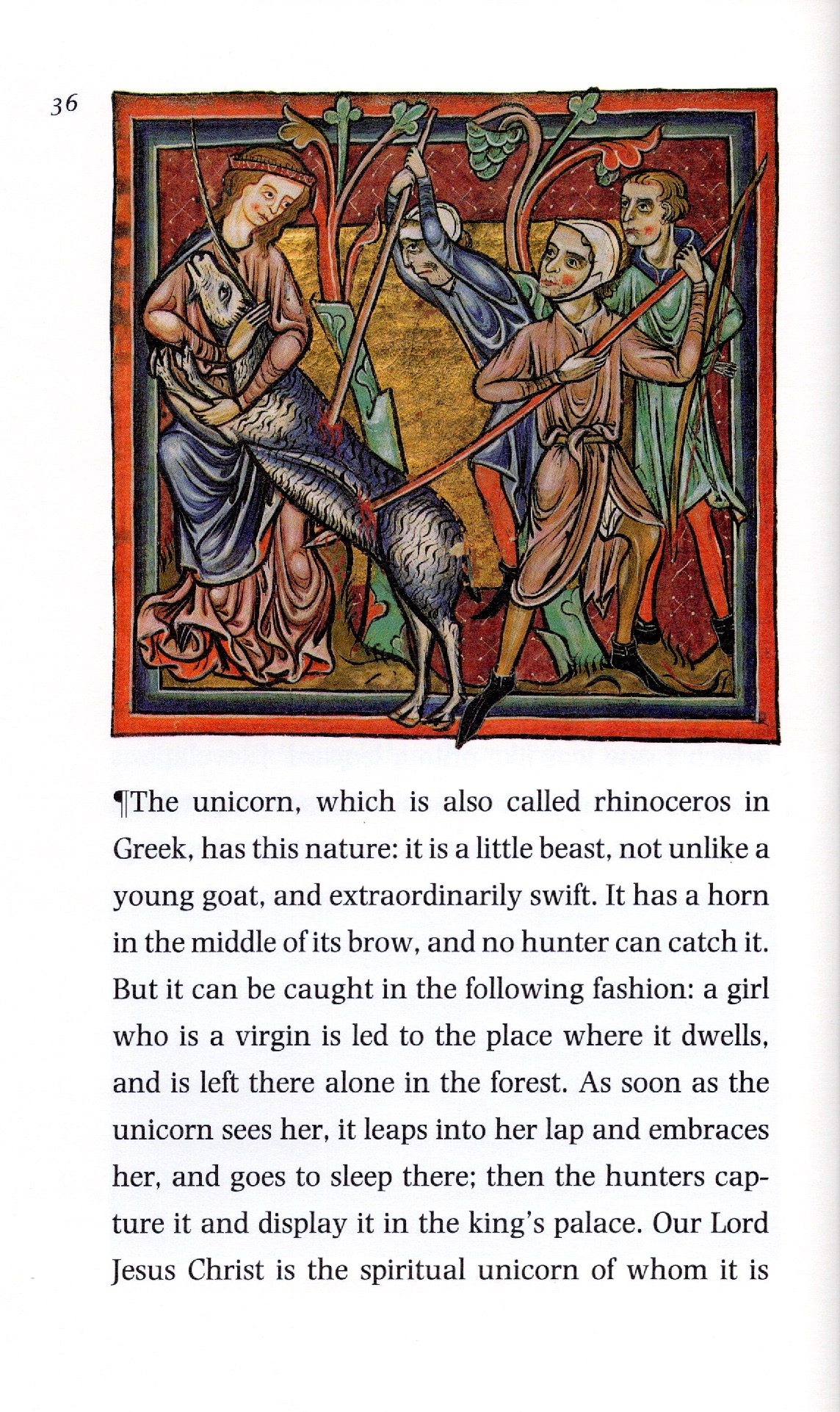
I’ve been reading Bestiary, a reproduction of M.S. Bodley 764, translated by Richard Barber, published by the Folio Society in 1992, and find it strangely reassuring. The book has facsimiles of the miniature manuscript illustrations of animals, along with the 13th century text. The text includes not only descriptions of the animals but also what the Creator intended us to learn from animals. Some of the lessons are surprising: the lion is merciful but the fox is the devil, as is the wolf, but not the loyal loving dog.
I pause early on to consider who made the manuscript, at an explanation of why wild animals are beasts: “They are called beasts because they possess their natural freedom and act as they themselves have willed. Their will is indeed free and they range hither and thither; where their instinct leads them, there they go.” Do I detect a note of envy in the words of the cloistered man who draws and writes about beasts that he has never seen? Indeed, as Barber explains, most of the book draws from earlier sources. The text is an odd blend of (second-hand) observation and fantasy. In the section on horses, for example, I nod along to such descriptions as the quivering limbs of fast horses, then draw up short at a passing reference to centaurs:
“If their master is killed or dies, horses will weep. It is said that only horses will weep for men, and only they feel sorrow. Centaurs share the natures of men and horses. If men go to battle, they can foretell the outcome by the eagerness (or lack of it) of their horses.”
If the monks wrote it down, it must be true, right? The blend of horse and centaur, owl and phoenix, the cunning elephant followed by the self-castrating beaver, the two pages devoted to the barnacle bird, which “first appear as growths on pine-logs floating on the water…” and the recommendation to teach parrots words by whacking them on the head with an iron rod — all of this is wonderfully dubious. And if we survived this, then surely we will survive conspiracy theories and the fantasies generated by AI.

 DEBRA MARTENS
This is brilliant.Sent from my Galaxy